

Ornamental Fence Installation Instructions
Installation Videos
Malden Metals step by step ornamental fence installation guide
Tools Required
Before you begin, gather the following tools:
- Rubber Mallet
- Cordless Impact Drill
- String Line & Marker Pegs Or Spray Paint
- Magnetic Level
- Post Hole Digger
- Tape Measure
- Spade Shovel
- Wheelbarrow
- Magnetic Hex Driver
- Quick Set Concrete Mix
- Cordless Zip Disk/Hacksaw
Safety Tools
For your protection, always wear:
- Steel Toe Boots
- Work Gloves
- Safety Glasses
- Earmuffs Or Earplugs
1. Getting Started
First, read through the entire installation guide before beginning. This will help you avoid mistakes and reduce delays.
Keep all fencing materials in their packaging until needed. Additionally, store them on a level, smooth surface to prevent scratches.
Some cutting may be required during installation. Therefore, use a zip disk or hacksaw when trimming components.
Before digging, contact your local utility providers to mark underground lines. Do not begin digging until all buried services are clearly identified. Finally, confirm your property lines to ensure proper fence placement.
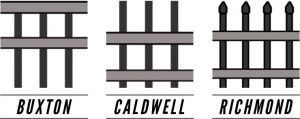
2. Choose Your Style
3. Digging Your Holes
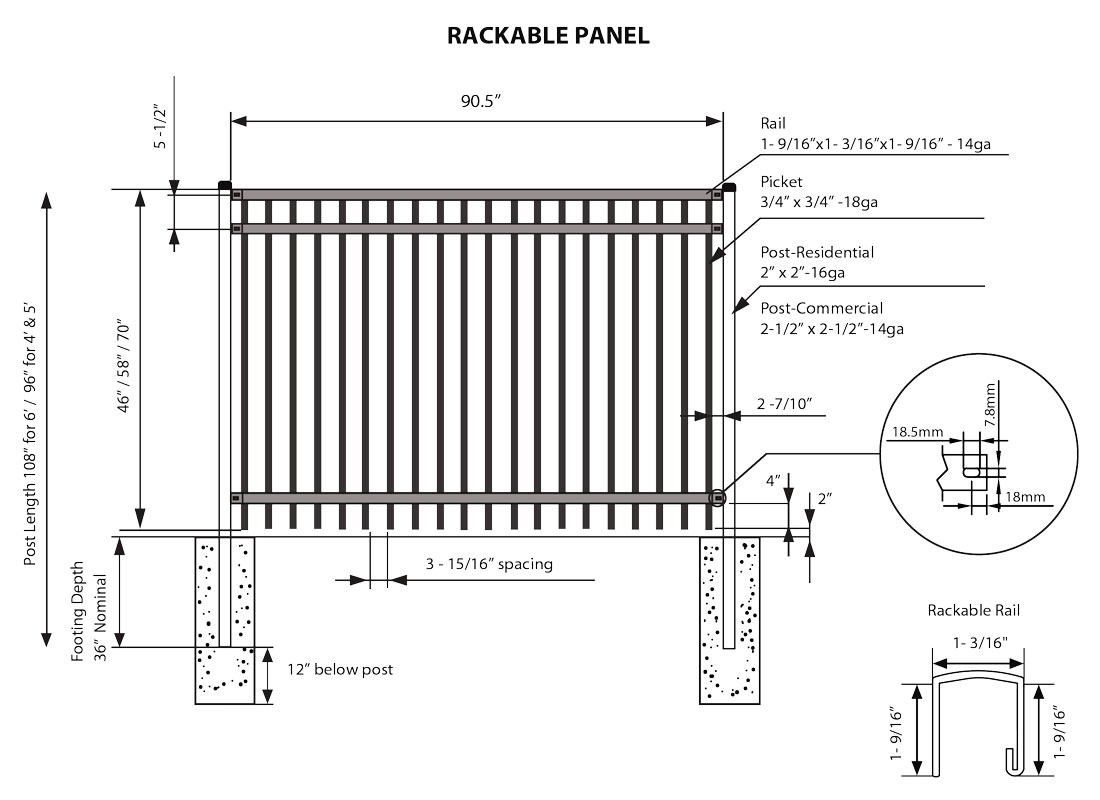
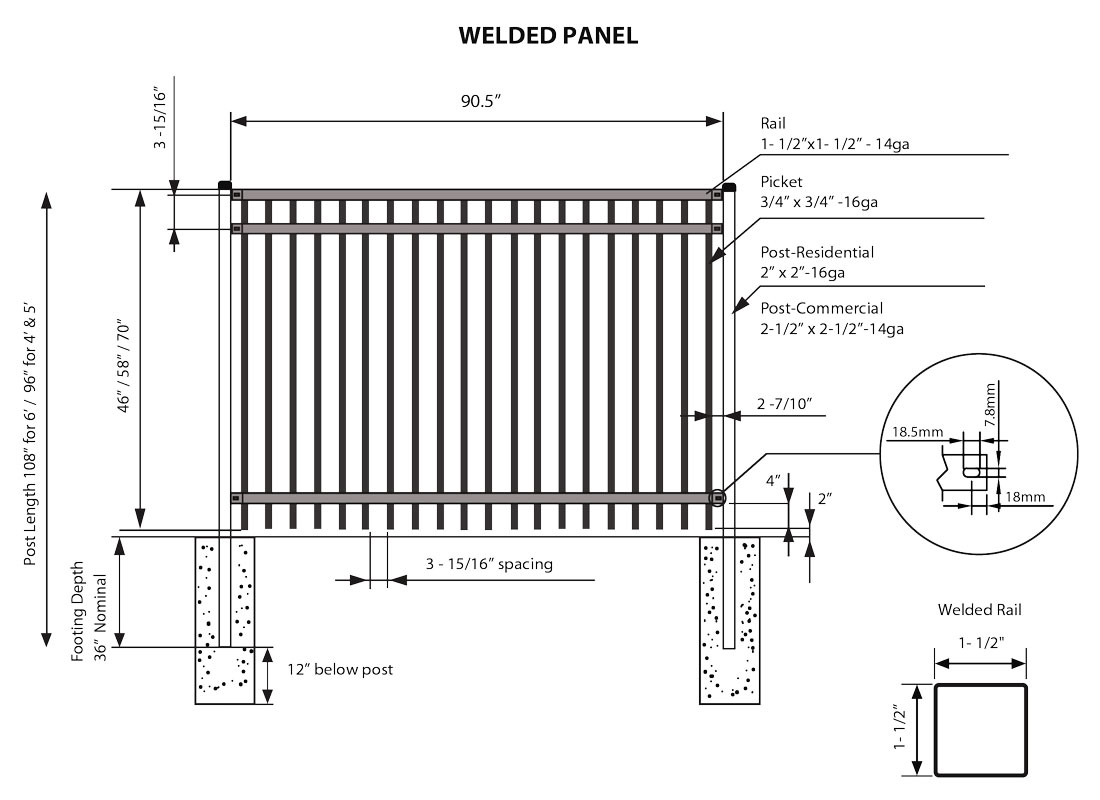
Before you begin digging, first confirm that all underground utility lines have been clearly marked. Properly, this ensures safety and prevents damage. Next, focus on spacing, which is essential for a clean installation. For an 8′ section, the ideal center-to-center distance is 93” for 2” posts and 93½” for 2½” posts. However, if the fence is installed on a slope, you may need to slightly reduce the spacing depending on the grade.
Then, start by laying out your fence line to determine how the final sections will fit. Drive a marker peg at each end of the run, and after that, stretch a string line tightly between them to create a straight reference line. Next, measure carefully and mark each post location using pegs or spray paint. For standard spacing, use 95” center-to-center for 2” posts and 96” for 2½” posts.
Afterward, dig each post hole to a depth of 48”. First, pour 12” of concrete into the bottom of the hole. Then, position the post so it sits 12” above the base layer. At the same time, use the string line to maintain alignment and a magnetic level to ensure each post is perfectly plumb. Finally, backfill the hole with concrete until it reaches approximately 2” below grade. This allows for minor settling before finishing above ground level. Repeat the process for each post and allow the concrete to cure completely before proceeding.
4. Decide Which Bracket’s Will Be Used
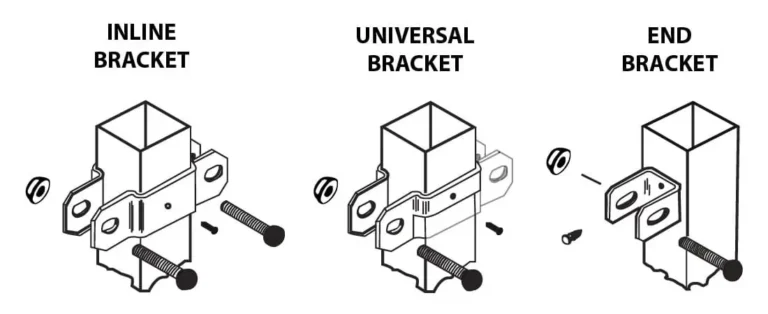
Below are 3 types of brackets that can be used to install an ornamental steel fence on a straight line:
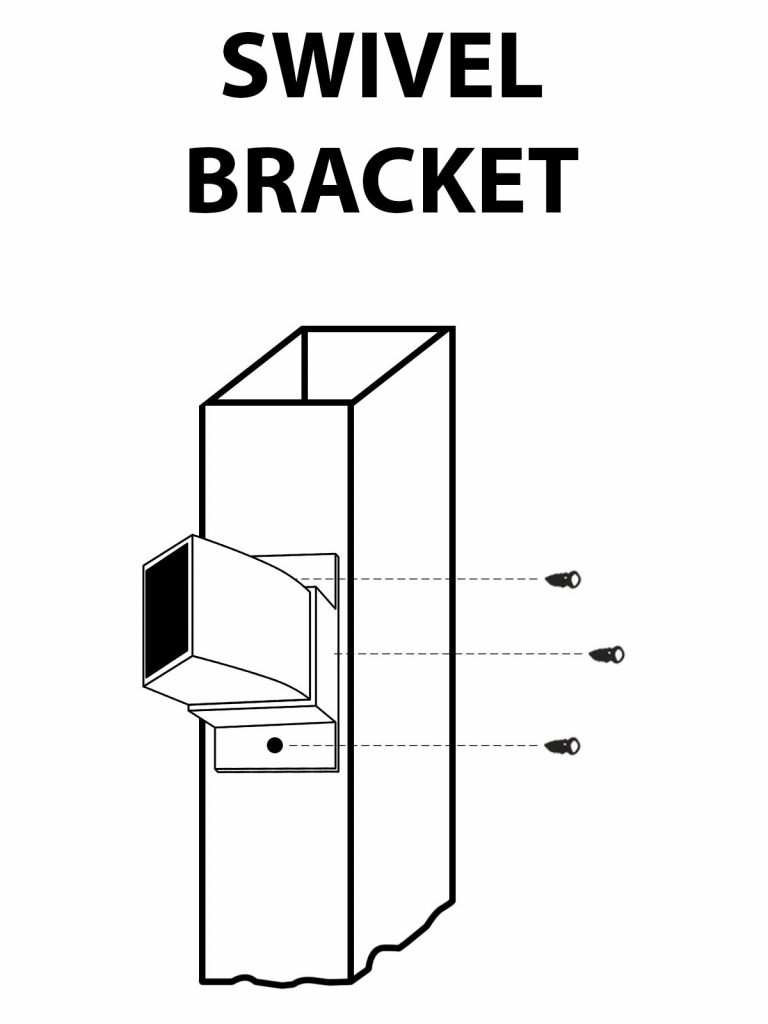
There is also a swivel bracket used for angled sections. Pictured below:
5. Securing The Brackets
Once your posts are set and cured, it’s time to attach the brackets. First, identify which type of bracket you’ll be using for each post. Next, use the provided self-tapping hex head screws or nut-and-bolt combinations depending on the bracket style. Initially, hand-tighten the fasteners so you can make adjustments after attaching the panels.
Then, measure the clearance at the bottom of the panel. It should be approximately 2” from the ground. Additionally, check the spacing from picket to post to ensure both sides are even.
Universal Bracket
Slide the universal bracket over the post and align it with the panel. Afterward, secure it on both sides of the post. Then, attach the panel using the provided nut-and-bolt combination. If needed, universal brackets can be stacked in alternating directions because they are offset.
Inline Bracket
Position panel to line post and align rail with one side of the post. Next, secure panel to bracket using the nut and bolt combination provided. Make sure panels are level with grade and secure them to post using a self-tapping hex head screw.
End Mount Bracket
Use a tape measure to layout the correct bracket location on the post. Then attach end mount bracket to post using a cordless drill and hex head driver. After that secure panel to bracket using the nut and bolt combination provided.
Swivel Bracket
Identify the required angle before attaching the swivel bracket to the post. The bracket will accommodate angles up to 45 degrees. To set the angle, tighten the swivel bracket set screw on the post attaching side of the bracket. Attach swivel bracket to the center of the post. Secure the swivel bracket to the post by using two self-tapping hex head screws. Insert panel into the bracket and drill through the bracket into the panel rail.
6. Cutting Or Trimming Panels/Posts
With a tape measure, find the post spacing and make a mark on your panel. Use masking tape to mark your line. Cut on the outside edge of the masking tape with a hacksaw or zip disk. Use your file to shave off any rough edges. Mark a new bracket hole and drill through both side of the rail. Peel off tape and use your Malden Metals touch up paint pen. Make sure you cover your cut area and let dry. The panel is ready to be installed.
7. Installing Fence Panels On A Slope
Make sure your post spacing is accurate. The larger the slope, the shorter the panel will be. The rackable panels can be racked up to 40 degrees. There are two ways to install a rackable fence on a slope.
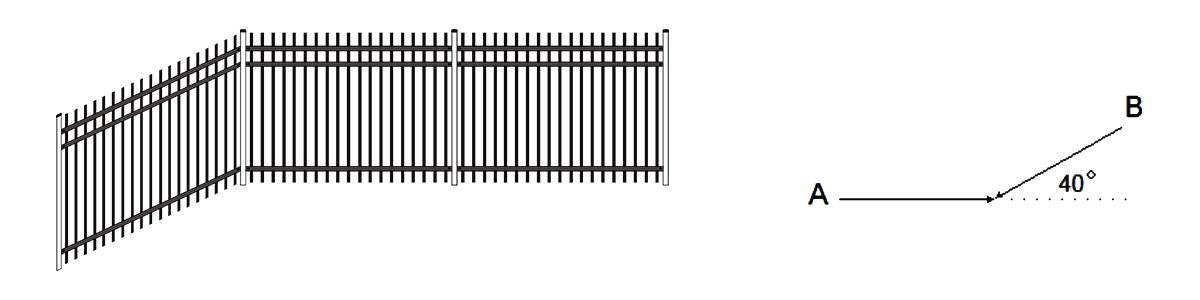
Option 1:
Adjust the panel to be parallel to the grade and pull your panel up hill until your slope is determined.
Option 2:
Attach panel to the post on the up-hill side then pull panel to the downhill bracket.
Fasten your nut and bolt combination provided.
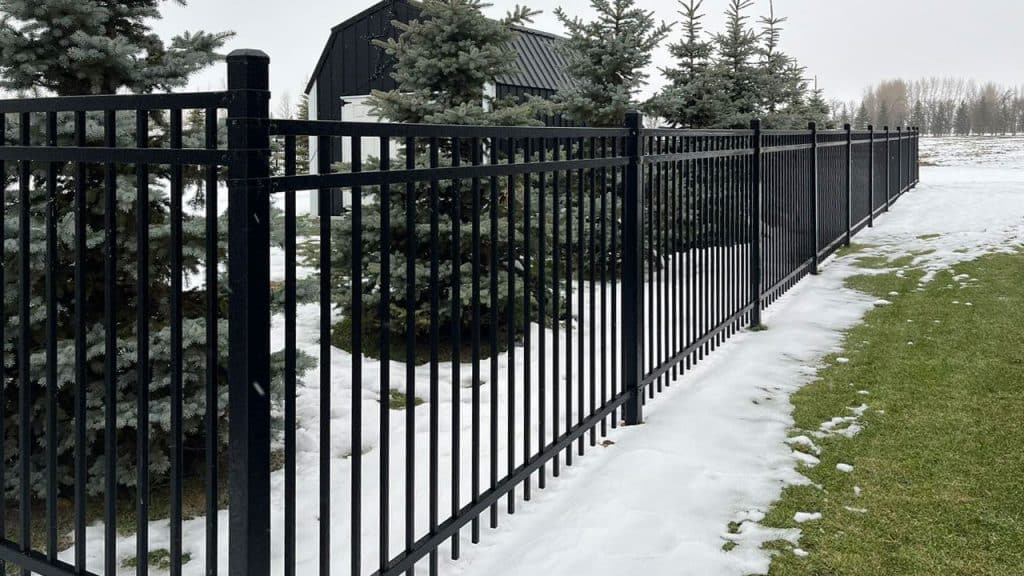
8. Enjoy Your New Fence
True Guard™ Protection System
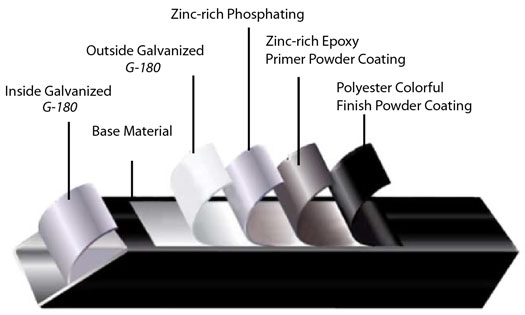
- To prevent rusting from base material, all of our products are galvanized and have a Zinc Mass of 180g inside and out.
- To ensure superior adhesion, each of our products undergo seven stages of pre-treatment with zinc-rich phosphate.
- To cover all welds and cut edges, zinc-rich epoxy primer powder coating are applied to all our products.
- To achieve exceptional anti-corrosion and weather resistant performance, polyester finish powder coating are administered to our products.
More Layers, More Protection
Need a Quote?
Time for a new fence? We’ll put you in contact with a dealer in your area who can provide an estimate on a new fence.
Latest Blog Post
Connect With Us
Want to learn more about Malden Metals?
- Spice up your home with a metal fence panels
- Fencing tips from experienced professionals
- Check out important aspects of fencing
- On-demand fence products and hardware